
Halloween can be exciting for young children, but it can also feel like a lot to handle. Bright decorations, unfamiliar costumes, loud music, crowded streets, and spooky surprises can quickly become overwhelming for toddlers and preschoolers. That’s why the best Halloween activities for preschoolers aren’t necessarily the biggest or most elaborate ones. Sometimes, a comfortable costume, a simple craft, and a short evening of trick-or-treating are more than enough.
If your child loves exploring but feels unsure around unfamiliar characters or noisy celebrations, you don’t have to skip Halloween altogether. A little preparation and a flexible plan can help make the experience more enjoyable for everyone.
Whether you’re looking for toddler Halloween ideas, sensory-friendly activities, or ways to make costumes less stressful, this guide offers practical suggestions for celebrating at your child’s pace.
Why Halloween Can Feel Overwhelming for Toddlers and Preschoolers
For adults, Halloween decorations and costumes are familiar seasonal fun. For a young child, however, a friendly-looking character wearing a mask might suddenly seem unfamiliar or frightening.
There are several reasons Halloween can feel overwhelming for little ones:
- Unfamiliar appearances: Masks, face paint, oversized costumes, and unusual decorations can make familiar people look different.
- Loud sounds: Halloween parties, music, doorbells, and excited crowds can create too much noise.
- Different textures: Scratchy fabrics, tight masks, stiff hats, and uncomfortable shoes can make costumes difficult to wear.
- Unexpected surprises: Motion-activated decorations, sudden sounds, and spooky displays can catch children off guard.
- Changes in routine: Staying out later than usual or missing familiar meal and bedtime routines can make an already busy day harder.
Every child responds differently. One toddler might happily wear a superhero costume but dislike face paint. Another might enjoy pumpkin crafts but prefer watching trick-or-treaters instead of joining them.
The goal isn’t to make every child participate in every Halloween activity. It’s to give them opportunities to enjoy the parts that feel comfortable.
1. Try Costumes Before Halloween Night
One of the easiest ways to avoid a last-minute Halloween struggle is to introduce the costume well before October 31.
A costume that looks adorable in a photograph might feel completely different when your child actually wears it. The fabric may itch, the sleeves may feel restrictive, or a hat might keep slipping over their eyes.
Instead of waiting until Halloween evening, try a few short costume practice sessions.
Make costume trial runs part of playtime
Start by letting your child see and touch the costume. Put it somewhere familiar, such as their bedroom or play area, and give them time to explore it without pressure.
Next, try these simple steps:
- Let your child choose between two comfortable costume options.
- Try the outfit on for a few minutes during a relaxed part of the day.
- Check whether the fabric feels soft and comfortable.
- Make sure shoes fit properly and allow easy movement.
- Practice putting on and removing hats, capes, and accessories.
- Let your child look in a mirror and get familiar with the new appearance.
If your child doesn’t want to wear the entire costume, that’s okay. A themed T-shirt, colorful pajamas, or a simple accessory can be a perfectly good alternative.
Choose comfort over complicated costumes
For toddlers and preschoolers, comfortable costumes are often easier to enjoy throughout the day.
Consider simple ideas such as:
- A friendly pumpkin outfit.
- A soft animal costume.
- A favorite character printed on comfortable clothing.
- A colorful cape worn over everyday clothes.
- A simple hat or themed headband.
Avoid forcing masks, heavy accessories, or face paint if your child dislikes them. Make sure costumes allow clear vision, comfortable movement, and safe walking. Keep costume accessories away from small children if they contain choking hazards.
2. Plan a Low-Scare Trick-or-Treating Experience
Trick-or-treating doesn’t have to involve visiting dozens of houses or staying outside until bedtime. For younger children, a short and familiar route may be a much better experience.
If your child is new to Halloween celebrations, start by explaining what will happen. You can describe how children dress up, visit a few houses, say hello, and receive treats.
Create a simple trick-or-treat plan
Here are a few ways to make the evening more comfortable:
- Choose familiar surroundings: Start with a neighborhood or route your child already knows.
- Keep the outing short: A few enjoyable stops can be enough for a young child.
- Go early: Consider an earlier outing before streets become busier and darker.
- Bring a familiar comfort item: A favorite small toy or blanket may help your child feel more comfortable.
- Stay together: Keep your child close to a trusted adult and supervise them throughout the outing.
- Allow breaks: Find a quieter place if your child needs a moment away from the excitement.
- Have an exit plan: Let your child know that you can head home whenever they are ready.
It can also help to practice simple interactions beforehand. For example, show your child how to say hello, hold out a treat bag, and say thank you. They don’t have to speak if they feel shy; a wave or smile is fine too.
Make safety part of the fun
Choose costumes that fit properly and avoid long trailing fabric that could cause trips. Use reflective details or other visible accessories, and carry a flashlight or glow stick with adult supervision. Stay on sidewalks, use designated crossings, and check treats before allowing children to eat them.
Most importantly, watch your child’s comfort level. If the noise, darkness, or unfamiliar decorations become too much, heading home early is a perfectly reasonable decision.
3. Three Gentle Halloween Crafts for Preschoolers
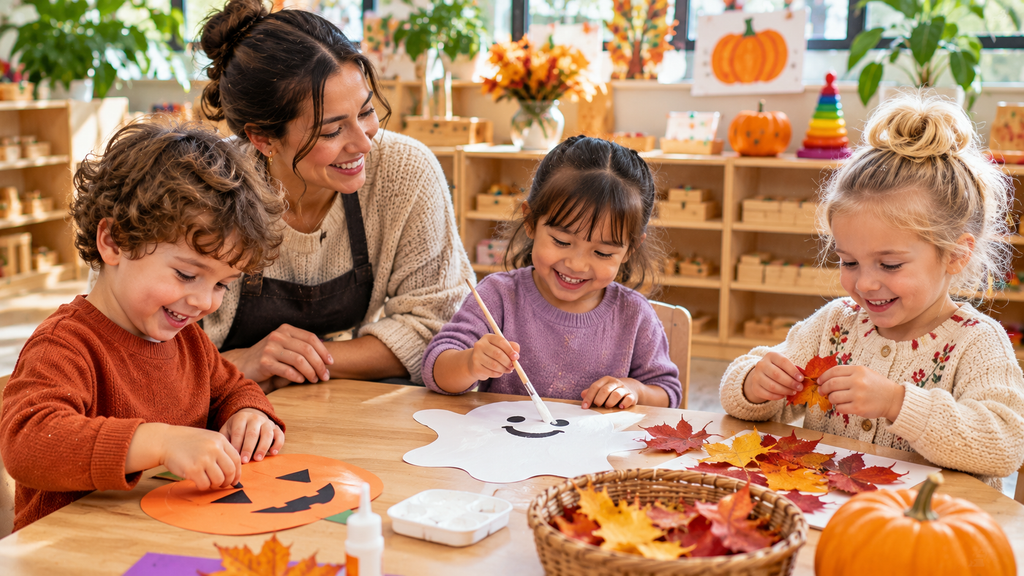
Not every Halloween celebration needs to involve costumes or trick-or-treating. Quiet, hands-on activities can be a lovely way for young children to enjoy the season from the comfort of home.
These three simple crafts use familiar materials and can be adjusted to suit your child’s interests and abilities.
Craft 1: Paper Plate Pumpkin
This is an easy Halloween activity for toddlers and preschoolers who enjoy painting, coloring, or sticking materials onto a surface.
What you’ll need:
- One paper plate.
- Orange washable paint or orange crayons.
- Green construction paper.
- Child-safe glue.
- A paintbrush or sponge.
How to make it:
- Give your child a paper plate and let them color or paint it orange.
- Cut a small stem from green construction paper.
- Help your child attach the stem to the top of the plate.
- Allow the pumpkin to dry before displaying it.
For younger toddlers, you can prepare the materials in advance and let them focus on painting or coloring. There’s no need for a perfect pumpkin. The process of exploring colors and textures is the enjoyable part.
Craft 2: Friendly Paper Ghosts
Ghost decorations don’t have to be scary. This simple craft turns a familiar Halloween character into a friendly little creation.
What you’ll need:
- White paper or white cardstock.
- Child-safe crayons or markers.
- Cotton balls, if appropriate for your child’s age.
- Child-safe glue.
How to make it:
- Draw or cut out a simple ghost shape before starting.
- Let your child color the ghost or decorate it with paper shapes.
- Add a friendly smile using crayons or markers.
- Display the finished ghost somewhere your child can see it.
Invite your child to give the ghost a name or describe what it looks like. This turns a simple craft into an opportunity for conversation and imaginative play.
For children under three, avoid loose cotton balls and other small craft materials that may present choking risks. Use larger, age-appropriate materials and supervise closely.
Craft 3: Halloween Color Sorting
If your child enjoys arranging objects and recognizing colors, a Halloween-themed sorting activity is a simple way to bring seasonal fun into everyday play.
What you’ll need:
- Large orange, purple, and black paper circles.
- Large colored blocks or other age-appropriate objects.
- Three baskets or containers.
How to play:
- Place one colored paper circle beside each basket.
- Show your child the different colors.
- Invite them to place matching objects into the corresponding baskets.
- Talk about the colors as they sort.
You can make the activity easier by starting with two colors and adding another when your child is comfortable. Always use large, age-appropriate objects and supervise young children.
This is a good example of how a seasonal activity can also encourage observation, matching, and hands-on exploration without requiring complicated supplies.
4. Keep Halloween Decorations Friendly and Familiar
Decorating your home can be part of the celebration, but think about how decorations might look from a young child’s perspective.
Instead of filling every room with spooky surprises, consider choosing cheerful, familiar decorations that your child can help create.
Some gentle decorating ideas include:
- Paper pumpkins and colorful autumn leaves.
- Friendly ghost drawings with smiling faces.
- Orange and purple paper garlands.
- Handmade Halloween artwork displayed at your child’s eye level.
- Simple pumpkin decorations without frightening faces.
Let your child participate in choosing where decorations go. Giving them a little control can make unfamiliar seasonal changes feel more predictable.
If your child is uncomfortable with a particular decoration, there’s no need to keep it on display. A fun Halloween environment should feel welcoming, not frightening.
5. Follow Your Child’s Pace Instead of the Halloween Schedule
One of the most helpful things parents can remember is that there is no single correct way to celebrate Halloween.
Some children will want to dress up, visit friends, collect treats, and stay out longer. Others may prefer making a pumpkin craft at home and spending the evening with their family.
Both experiences are perfectly valid.
Try to keep familiar routines wherever possible. Offer meals at regular times, allow opportunities for rest, and avoid packing too many activities into one afternoon.
If your child becomes upset, take a break rather than insisting that they continue. A quiet activity or a return to familiar surroundings may be all they need.
At Super Bees Academy, the emphasis is on a welcoming, loving environment where children have room to explore and enjoy being kids. That same child-centered mindset can be useful when planning seasonal activities at home: offer opportunities, provide reassurance, and allow children to participate at their own pace.
A Gentle Halloween Checklist for Parents
Before Halloween arrives, use this quick checklist to prepare for a calmer celebration.
- Choose a comfortable costume and try it on in advance.
- Check that clothing and shoes allow easy movement.
- Avoid forcing masks, face paint, or uncomfortable accessories.
- Prepare one or two simple Halloween crafts.
- Choose familiar, age-appropriate decorations.
- Plan a short trick-or-treating route if your child wants to participate.
- Bring a flashlight and stay with your child throughout the outing.
- Keep familiar meal and bedtime routines where possible.
- Have a plan for taking a break or heading home early.
- Remember that watching, participating a little, or staying home are all acceptable choices.
Making Halloween a Happy Experience for Little Ones
Halloween should be an opportunity for children to explore, create, play, and enjoy time with the people they love. It doesn’t need to be filled with elaborate costumes, busy events, or frightening decorations to feel special.
With a little preparation, simple crafts, and a flexible trick-or-treating plan, families can create a celebration that respects each child’s comfort level.
At Super Bees Academy, children aged two to five are welcomed into a caring early learning environment with a 1:8 teacher-to-child ratio, a Montessori-inspired and STEM-focused approach, and room for everyday play and exploration.
Whether you’re preparing for Halloween or exploring an early learning environment for your little one, choosing a place that values a warm and welcoming childhood experience matters.
Schedule a tour to learn more about the learning environment and daily experience at Super Bees Academy. “`
